
"historic coffee laws"
200 article(s) found

Historical Flavor description of Panamanian single Bean planting Variety description of Caesar Louis Manor
Professional baristas please follow the coffee workshop (Wechat official account cafe_style) for a long time underestimated or even ignored Panamanian coffee, until the annual international cup test competition held in recent years, the emergence of the best coffee in Panama Best of Panama and Panama Emerald Manor (Hacienda La Esmeralda) has completely changed, this cup test competition has attracted global attention.

Description of Historical characteristics and Flavor of Coffee Bean planting varieties in Caesar Louis Manor
Professional barista communication, please follow the coffee workshop (Wechat official account cafe_style) Kasha? Louise is not only the winner of the Best of Panama Best Panamanian bid, but also an important partner of Panamanian boutique raw beans. Fresh air and green forests melt in the beautiful scenery, enriching the flavor of caffeine in this area. And this is the place in Pakistan.

Foaming skills from historical origins to milk characteristics to hand-on tutorials teach you perfect "foaming".
Communication of professional baristas Please pay attention to the coffee workshop (Wechat official account cafe_style) Don't get me wrong, it is the daily work of baristas to make bubbles. Whenever guests order cappuccino or latte and other espresso with milk, they have to play a dozen, but how to make them perfectly? This article ranges from historical origin to milk characteristics to hands-on tutorials. Please put it away and practice it slowly.

Popularization of Professional Coffee knowledge: a brief History of Coffee Development in Panama
From today, I begin to tell the vast number of forced friends about coffee knowledge, so that everyone can learn a lot, popularize coffee knowledge and know that these forced friends will feel that they have improved a lot in an instant, and there are more boastful materials to go out! Okay, I'll start next. Today's first story, a brief history of the development of coffee in Panama: according to historical data, coffee was first used by Europe.

Acid taste of San Pedro Manor Coffee in Puerto Rico characteristics of boutique coffee production area
Puerto Ricans are the general name of the residents of United States Puerto Rico in Central America and the Caribbean. There are about 3.4 million people (1979). Spanish and English are widely used. More Catholic. The earliest inhabitants of Puerto Rico were Arawak and Caribbean Indians. In 2012, whites of European origin accounted for about 73% of the population, mixed-race people accounted for 23%, and blacks accounted for 4%. There are more than 20,000 Americans and others.

Introduction to the coffee producing area of Larez Yaoke Coffee Manor in Puerto Rico with strong flavor and long aftertaste.
On September 23, 1869, the people of Puerto Rico were in R. Under the leadership of Emmetrio Betons, an uprising was held in the town of Larez (known as the voice of Larez in history), which declared the establishment of a republic on the 24th and was later suppressed by the Spanish colonial army. After a long struggle, Puerto Rico was finally granted local self-government by Spain. However, from then on, after the Spanish-American War, the island became an American colony, when

The pure, fragrant and grainy coffee of Puerto Rico Larez Yaoke has a special taste and taste.
Puerto Ricans are the general name of the residents of United States Puerto Rico in Central America and the Caribbean. There are about 3.4 million people (1979). Spanish and English are widely used. More Catholic. The earliest inhabitants of Puerto Rico were Arawak and Caribbean Indians. In 2012, whites of European origin accounted for about 73% of the population, mixed-race people accounted for 23%, and blacks accounted for 4%. There are more than 20,000 Americans and others.

Introduction to Galapagos Islands Coffee with rich taste, sweet in sour and medium roast
Flavor: taste rich, sour and sweet suggested baking method: medium roasting ★★★: excellent Galapagos Islands Coffee Market: due to the unique role of the Galapagos Islands in the historical process, the Ecuadorian government has turned the Galapagos Islands into a national park, no longer allowed to reclaim the land for new agricultural land, and strictly forbids the introduction and use of chemical fertilizers, pesticides and herbicides

The spread of coffee in China and the development of coffee shop culture
The development of coffee in China according to historical records, coffee was first planted in Taiwan in 1884, which opened the prelude to the development of coffee in China. The earliest coffee cultivation in mainland China began in Yunnan, when a French missionary brought the first coffee seedlings to Binchuan County in Yunnan Province at the beginning of the 20th century. For nearly a hundred years after that, coffee was only a star in the vast territory of China.

Introduction of Blue Mountain Coffee Manor in Jamaica A brief introduction to Silver Mountain Coffee Manor
In 1717 King Louis XV of France ordered the cultivation of coffee in Jamaica, and in the mid-1920s, the Governor of Jamaica, Sir Nicholas Lawes, imported Arabica seeds from Martinique and began to plant them in St. Andrew. To this day, the St. Andrews area is still the Jamaican Blue Mountain Coffee.

Description of Coffee Flavor in Berman Manor in Kenya; introduction to the taste of varieties in producing areas
Guatemala is a multi-party, independent democratic republic. The Constitution promulgated on 15 January 1986 provides for the separation of legislation (the Guatemalan Congress), law enforcement (the President and Vice-President) and the judiciary (the Supreme Court), belonging to the system of separation of powers. Congressional and presidential elections are held every four years, and all citizens over the age of 18 have the right to vote, while soldiers do not have the right to vote. Congress orders the most

The spread and Development of Coffee History
The spread and development of coffee European historians argue that there were artificially grown coffee trees for trade in Yemen in the southern Arabian Peninsula as early as 800 years ago, and there is also historical evidence that at that time, there was indeed trade across the Red Sea between Yemen and Ethiopia. Based on this, it is speculated that if the use of coffee is made by Ethiopians

Introduction to the characteristics of Puerto Rican Coffee Flavor Manor with Pure, aromatic and heavy granule
In 1898, the Spanish-American War broke out and Spain was defeated. According to the Treaty of Paris, Puerto Rico was ceded to the United States. The administrative jurisdiction of the United States over Puerto Rico first took the form of a military junta. During its two years of governance of the island, the junta established schools, roads, railways, hospitals and health facilities. In 1900, the United States Congress established civilian control over the island. The Governor, the Cabinet and

Is the sex-price ratio of Panamanian coffee high? a comparative introduction to the sex-price ratio of coffee between rose summer and blue bobcat droppings
For the exchange of professional baristas, please follow the coffee workshop (official Wechat account cafe_style) about the development of coffee in Panama: according to historical data, coffee was first brought to Panama by European immigrants in the 19th century. In the past, Panamanian coffee did not have a good reputation, and its output was only 1 / 10 of that of its neighbor Costa Rica, but now the coffee industry's focus on boutique coffee makes

The history of coffee in Taiwan: most of it is inherited from the Japanese era
Professional barista communication Please pay attention to the coffee workshop (Wechat official account cafe_style) most of Taiwan's coffee history is inherited from the Japanese era, although the early Dutch and British once occupied Taiwan, but did not leave much historical traces about coffee. Coffee trees were also planted during the Japanese occupation era, and the Japanese Industry Bureau introduced coffee from Hawaii in order to develop cash crops.
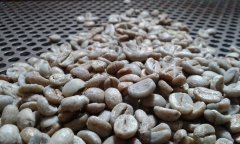
COB: a complex evolutionary history of the official grading system for raw coffee beans in Brazil
For more information on coffee beans, please follow the Coffee Workshop (Wechat official account cafe_style) cob: the complex history of the official classification system in Brazil the origin of cob sensory analysis has provided an important mechanism for pricing goods around the world since the beginning of trade. Color, smell and taste are one of many attributes used to grade a wide range of food and agricultural products.

Introduction to the characteristic flavor and taste of Puerto Rico boutique coffee bean manor
In the middle of the 18th century, with the increasing number of immigrants and slaves, coffee became the main export. Geographical location on September 23, 1869, the people of Puerto Rico were in R. Under the leadership of Emmetrio Betons, an uprising was held in the town of Larez (known as the voice of Larez in history), which declared the establishment of a republic on the 24th and was later suppressed by the Spanish colonial army. After a long struggle, Puerto Rico was finally defeated

Introduction to the unique acidic taste of San Pedro Manor Coffee, Puerto Rico
On 6 November 2012, Puerto Rico held its fourth referendum. The referendum consists of two rounds of voting. In the first round, Puerto Ricans voted on whether they wanted to change the status quo in their relations with the United States. 1.8 million people were eligible to vote, 65000 gave up the first round of voting, and 54 per cent of those who took part in the vote supported a change of relationship. Later, Puerto Ricans were like

What are the mocha coffee producing areas in Yemen? How should I drink Yemeni coffee? Yemeni ancient law sun
Although the wave of fine goods is the revival of technology replacing machinery, the market is still inseparable from what dominates supply and demand.

The History of Argentina in the Classic Coffee list
Buenos Aires, the capital of Argentina, is said to be a city with more cafes than Paris. There are currently 3250 coffee shops in Buenos Aires, which means there is one coffee shop for every 1000 people in the city. Argentine media wrote that the coffee shop is the load of daily life and historical heritage. It can be used not only for people to call friends and talk, but also to be isolated from the group.